
Medically Reviewed by Dr. Mehrshad Yousefi, DMD on September 25, 2026
Losing multiple teeth changes more than appearance. It affects how you chew, how you speak, and over time, how the jawbone itself holds its shape. For patients dealing with extensive tooth loss, full-mouth dental implants have become a well-established path toward restoring both function and the structure that supports a natural-feeling bite.
At Lumiere Orlando Dentistry in Maitland, Dr. Mehrshad Yousefi evaluates each patient’s specific situation to determine whether full-mouth implants, single-tooth restoration, or a combination approach makes the most sense. Here is what to know about how full-mouth dental implants work, who is a candidate, and how they compare to other tooth replacement options.
What Are Dental Implants?
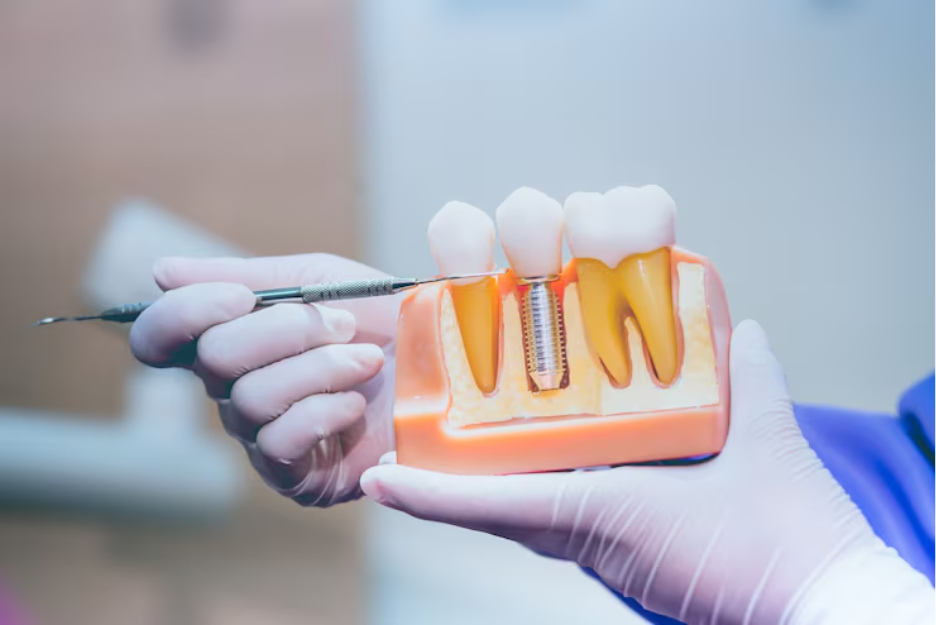
Dental implants are titanium posts placed surgically into the jawbone to serve as artificial tooth roots. Once integrated with the bone through a process called osseointegration, they provide a stable foundation for crowns, bridges, or full-arch dentures. Unlike traditional dentures or bridges, implants are anchored directly in the bone rather than resting on the gums or relying on adjacent teeth for support.
Every implant system includes three core components. The implant post is the titanium or zirconia screw inserted into the jawbone. The abutment is a connector that attaches to the top of the post. The crown, bridge, or denture is the visible replacement tooth or teeth secured to the abutment. For patients replacing all teeth in one or both arches, several strategically placed posts can support a full set of fixed teeth. Learn more about the available options at the dental implants page.
How Dental Implants Work
The implant process unfolds across several stages, each of which is essential to long-term stability. Surgical placement is the first step: a titanium post is inserted into the jawbone, creating the artificial root that will eventually hold the replacement tooth.
After placement, the jawbone gradually fuses with the implant surface over several months through osseointegration, giving implants their long-term stability. Once that process is complete, an abutment is connected to the post. Finally, a custom crown, bridge, or full-arch prosthesis is secured to the abutment. The completed restoration looks and functions like natural teeth.
Types of Dental Implants
The type of implant recommended depends on how many teeth need to be replaced and the condition of the jawbone. Endosteal implants are the most widely used: screw-shaped titanium posts placed directly into the jawbone that can support single crowns, small bridges, or full-arch prostheses. Zirconia implants offer a ceramic alternative for patients who prefer metal-free materials and work well for single-tooth or bridge support. Full-mouth dental implants use multiple posts placed at strategic positions in the jaw to anchor a complete arch of teeth, restoring full function and appearance for patients with extensive tooth loss.
Benefits of Dental Implants
Implants offer functional and structural advantages that go beyond what traditional dentures or bridges can provide. Because they integrate with the jawbone, they stimulate bone tissue the same way natural tooth roots do, preventing the progressive bone loss that typically follows tooth extraction. This preservation helps maintain facial structure and prevents the sunken appearance that can develop over time with dentures.
Implants also function like natural teeth, allowing patients to eat, speak, and bite without discomfort or movement. Maintenance is straightforward: brushing, flossing, and regular dental checkups are all that is required. Unlike bridges, implants do not alter or depend on adjacent teeth, which preserves healthy tooth structure throughout the mouth. Visit the implant options page for a fuller comparison of restoration types.
Full-Mouth Implants vs. Single-Tooth Implants
A single-tooth implant replaces one missing tooth using one post, one abutment, and one crown. It is ideal for isolated tooth loss and provides stable, natural-looking restoration without involving neighboring teeth. Full-mouth dental implants address the entire upper or lower arch using several implant posts, which then support a fixed bridge or implant-supported denture. This approach suits patients with multiple missing teeth, extensive decay, or failing conventional dentures.
Choosing between the two depends on how many teeth need replacement, the condition of the jawbone, and the patient’s long-term goals. In some cases, a combination approach works best, with implants placed in key positions across the arch to restore function while minimizing the total number of surgical sites.
Who Is a Candidate for Dental Implants?
Most adults with good general health and adequate jawbone density are candidates for dental implants. Sufficient bone is required to anchor the post securely; patients who have experienced bone loss after tooth extraction may need a bone graft before implants can be placed. Healthy gum tissue is also important, as gum disease can compromise implant success if left unaddressed. Conditions such as uncontrolled diabetes may slow healing and require additional evaluation. The candidacy evaluation page provides a fuller overview of what the assessment involves.
Cost and Long-Term Value
Dental implants carry a higher upfront cost than bridges or removable dentures, with the total varying based on the number of implants, whether bone grafting is needed, and the type of final restoration. Over time, however, implants tend to be more economical because they rarely require replacement. The titanium post can last several decades, and the crown is typically the only component that may eventually need refreshing. Bridges, by comparison, usually need replacement every 7 to 12 years.
Recovery from full-mouth implant placement is longer than a single-tooth procedure because of the number of posts placed at once. Most patients manage mild discomfort with prescribed or over-the-counter pain relief during the first few days. Follow-up appointments monitor osseointegration progress and allow for any adjustments before the final prosthesis is secured.
Schedule a Consultation at Lumiere Orlando Dentistry
Full-mouth dental implants are a long-term investment in oral function and quality of life. Lumiere Orlando Dentistry in Maitland works with each patient to build a treatment plan that addresses their specific clinical picture and goals. Dr. Mehrshad Yousefi brings more than 250 hours of post-graduate implant training and a Fellowship in Implant Dentistry to every evaluation.
Schedule your consultation to find out whether full-mouth implants or another restoration approach is the right fit for you.
How long do full-mouth dental implants last?
With proper care and regular checkups, the titanium implant posts can last several decades and often a lifetime. The prosthetic teeth attached to the implants may eventually need replacement due to normal wear, typically after 15 or more years. Avoiding smoking, maintaining consistent oral hygiene, and attending routine professional cleanings all help maximize the lifespan of both the implants and the restoration.
Am I too old to get dental implants?
Age alone is not a disqualifying factor for dental implants. Adults of any age can be candidates provided they have adequate jawbone density, healthy gum tissue, and good general health. Bone grafting can often address bone loss in patients who have been missing teeth for some time. The evaluation at Lumiere Orlando Dentistry looks at the full clinical picture to determine whether implants are appropriate and, if so, how to plan placement.
What is the difference between implant-supported dentures and traditional dentures?
Traditional dentures rest on the gum surface and rely on suction or dental adhesive for stability. They do not stimulate the jawbone, so bone loss continues beneath the denture over time. Implant-supported dentures are anchored to posts placed in the jawbone, which prevents bone resorption, eliminates slipping, and restores more of the chewing force of natural teeth. Most patients find implant-supported options significantly more comfortable and functional than conventional alternatives.
How painful is the full-mouth implant procedure?
Local anesthesia is used throughout the surgical placement, so most patients experience little to no discomfort during the procedure itself. After surgery, mild soreness and swelling are common and are typically managed with prescribed or over-the-counter pain relief. Full-mouth procedures involve more implant sites than single-tooth placement, so the initial recovery may be a few days longer. Most patients return to normal activity within a week of surgery.

Medically Reviewed by Dr. Mehrshad Yousefi, DMD
Dr. Mehrshad Yousefi is the founder of Lumiere Orlando Dentistry in Maitland, Florida. With 250+ hours of post-graduate training in implantology, cosmetic dentistry, and biomimetic techniques, he holds a Fellowship in Implant Dentistry (FIDIA) and is a member of the Florida Academy of Cosmetic Dentistry (FACD). His clinical philosophy Function First, Aesthetics with Intention, and Precision Through Technology and Training guides every patient’s care.
Last modified:
Medical Disclaimer: The content provided on this blog is intended for informational purposes only and does not constitute medical or dental advice. Individual results may vary. Please consult with a licensed dental professional to determine the best course of treatment for your specific needs. Lumiere Orlando Dentistry is not responsible for actions taken based on the information provided in this blog.