
Medically Reviewed by Dr. Mehrshad Yousefi, DMD on September 25, 2026
When a tooth is missing, the gap affects more than appearance. It changes how you bite, how adjacent teeth drift over time, and how the underlying bone responds to the absence of root stimulation. Two well-established options exist for replacing a single missing tooth: a dental implant and a dental bridge. Each has real advantages, and the right choice depends on several clinical and personal factors.
At Lumiere Orlando Dentistry in Maitland, Dr. Mehrshad Yousefi walks each patient through a thorough evaluation before recommending either approach. Here is how the two options compare across the factors that matter most.
What Is a Single Tooth Implant?
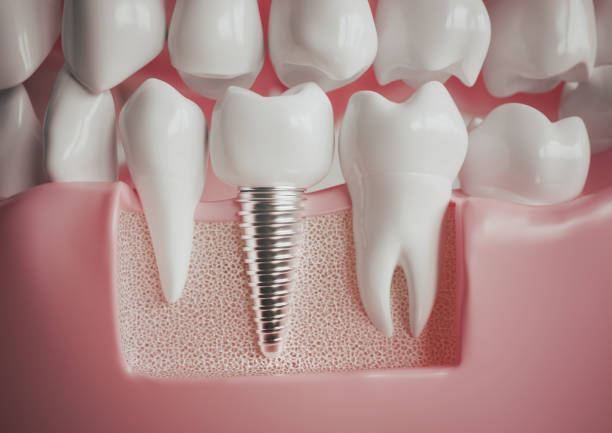
A single tooth implant replaces one missing tooth using three core components: a titanium or zirconia post inserted directly into the jawbone to act as an artificial root, an abutment that connects to the top of the post, and a custom crown that attaches to the abutment to create the visible tooth surface.
How osseointegration works. After placement, the jawbone gradually fuses with the implant surface through a process called osseointegration. This integration takes several months and is what gives implants their long-term stability and natural feel. Once osseointegration is complete, the final crown is secured to the abutment. Learn more about the different implant configurations at the dental implant options page.
Advantages of a Single Tooth Implant
Preserves jawbone density. A tooth root stimulates the surrounding bone with every bite. When that root is missing, the bone begins to resorb. An implant post provides the same mechanical stimulation, preventing the progressive bone shrinkage that occurs beneath bridges or dentures. Over time, this protection helps maintain facial structure.
Leaves adjacent teeth untouched. Placing an implant requires no alteration to neighboring teeth. The restoration is entirely self-supporting, anchored directly in the bone, so healthy tooth structure elsewhere in the mouth is fully preserved.
Functions like a natural tooth. Once restored with a crown, an implant allows for normal chewing, speaking, and biting without restriction or concern about movement. Most patients describe the feel as nearly identical to a natural tooth.
Long-term durability. The titanium post is designed to last several decades. The crown may eventually need replacement due to normal wear, but the implant itself typically remains stable and secure for a lifetime with proper care.
Straightforward maintenance. Implants require no special cleaning tools. Brushing, flossing, and regular professional checkups are all that is needed, the same routine used for natural teeth.
What Is a Dental Bridge?
A dental bridge fills a gap by suspending a false tooth, called a pontic, between two crowns. Those crowns are cemented onto the teeth on either side of the space, called abutment teeth, giving the bridge its stability. The result is a fixed, non-removable restoration that restores chewing function and appearance.
How a bridge is placed. The two abutment teeth are prepared by removing a portion of their enamel to make room for the crowns. Impressions are taken and the bridge is fabricated at a dental laboratory. Temporary crowns protect the prepared teeth during this period. When the final bridge is ready, it is permanently cemented in place.
Advantages of a Dental Bridge
No surgery required. A bridge is a non-surgical procedure, making it an option for patients who prefer a simpler process or who may not qualify for surgical placement based on their health history or medical situation.
Faster completion. The bridge process typically takes one to two weeks from preparation to final placement, compared to the several months required for implant osseointegration. For patients who want a quicker resolution, the timeline difference is significant.
Viable when bone volume is limited. Patients who have experienced significant bone loss after a long-standing gap may not have enough bone to anchor an implant securely. A bridge does not rely on jawbone density because it is supported by the adjacent teeth.
Practical when adjacent teeth already need crowns. If the teeth on either side of the gap are already heavily restored, damaged, or aesthetically compromised, preparing them as bridge abutments can address multiple concerns in a single treatment.
Lower upfront cost. The initial cost of a bridge is generally lower than an implant. For patients weighing near-term and long-term costs, this can be an important factor in the decision.
How Implants and Bridges Compare
The following table outlines the core differences to help clarify which solution may better fit your situation.
| Feature | Single Tooth Implant | Dental Bridge |
| Procedure | Surgical | Non-surgical |
| Aesthetic Quality | Highly natural | Natural but may vary |
| Longevity | Often 20+ years | 7–12 years |
| Impact on Adjacent Teeth | None | Requires reshaping |
| Bone Preservation | Yes | No |
| Cleaning | Brush and floss normally | Requires floss threaders |
| Stability | Excellent | Good |
| Cost Over Time | More cost-effective | May require more replacements |
Why Implants Are Often Preferred for Long-Term Oral Health
Natural function and bite strength. An implant transfers bite force directly into the jawbone, matching the mechanical behavior of a natural tooth root. This distribution keeps chewing force even across the arch and avoids placing unnecessary stress on neighboring teeth over time.
Bone and facial structure preservation. Because implants stimulate the bone with every bite, they prevent the progressive bone resorption that typically follows tooth loss. This ongoing stimulation helps maintain jaw height and volume, supports facial symmetry, and reduces the facial changes that can develop without root stimulation.
Long-term stability without altering other teeth. An implant stands independently. No neighboring teeth need to be permanently reshaped to support it. With proper care and regular checkups, the titanium post can remain stable for decades, making implants one of the more predictable long-term tooth replacement options available.
Factors to Consider Before Choosing
Several clinical and practical factors influence which option is the right fit for a given patient.
Bone density. Adequate jawbone volume is required to anchor an implant post securely. Patients who have experienced bone loss may need a bone graft before implant placement. When grafting is not desired or feasible, a bridge may be the more practical path.
Healing time. Implants require several months for full osseointegration, and additional procedures like grafting extend that timeline further. Bridges are typically completed in one to two weeks, which matters for patients who want a faster resolution.
Condition of adjacent teeth. When neighboring teeth are healthy and intact, an implant preserves them completely. When those teeth are already compromised and need crowns, a bridge can address multiple concerns at once.
Oral hygiene habits. Bridges require cleaning beneath the pontic using floss threaders or interdental brushes. Implants can be cleaned the same way as natural teeth, which many patients find easier to maintain consistently over time.
Long-term cost. Implants typically require fewer replacements over a lifetime. Bridges generally need replacement every 7 to 12 years, and total costs over several decades can approach or exceed the cost of an implant.
Schedule a Consultation at Lumiere Orlando Dentistry
Choosing between a single tooth implant and a dental bridge is a decision best made with a thorough clinical evaluation. Lumiere Orlando Dentistry in Maitland provides comprehensive diagnostics, including imaging and bone assessment, to help each patient understand which option aligns with their oral health and long-term goals. Dr. Mehrshad Yousefi’s 250+ hours of post-graduate implant training and Fellowship in Implant Dentistry (FIDIA) inform every treatment recommendation.
Schedule a consultation to find out which tooth replacement option is right for you.
Do dental implants last longer than bridges?
In most cases, yes. The titanium implant post is designed to last several decades and often a lifetime with proper oral hygiene and regular checkups. The crown attached to the implant may eventually need replacement due to normal wear, but the post itself typically remains stable. Dental bridges generally need replacement every 7 to 12 years, so over a lifetime the long-term cost of an implant is often lower despite the higher upfront investment.
Is implant surgery painful?
Local anesthesia is used throughout the implant placement procedure, so most patients experience little to no discomfort during surgery. Some mild soreness, swelling, and tenderness in the days following placement are normal and are typically managed with prescribed or over-the-counter pain relief. Most patients find the recovery more manageable than expected and return to normal activity within a few days of the procedure.
Can a dental bridge be replaced with an implant later?
In many cases, yes. If a bridge fails or needs replacement, an implant can often be placed to provide a more permanent and bone-preserving solution. However, transitioning from a bridge to an implant typically requires a bone evaluation first, since the jawbone beneath the bridge pontic continues to resorb over time without root stimulation. If significant bone loss has occurred, a bone graft may be needed before implant placement can proceed.
How long does the full implant process take?
The timeline varies depending on whether any preparatory procedures, such as a bone graft or tooth extraction, are needed first. Once the implant post is placed, osseointegration typically takes three to six months before the abutment and crown are added. Patients who do not require preparatory procedures can often complete the full process in four to six months. A detailed timeline is discussed at the initial consultation based on each patient’s specific clinical situation.

Medically Reviewed by Dr. Mehrshad Yousefi, DMD
Dr. Mehrshad Yousefi is the founder of Lumiere Orlando Dentistry in Maitland, Florida. With 250+ hours of post-graduate training in implantology, cosmetic dentistry, and biomimetic techniques, he holds a Fellowship in Implant Dentistry (FIDIA) and is a member of the Florida Academy of Cosmetic Dentistry (FACD). His clinical philosophy Function First, Aesthetics with Intention, and Precision Through Technology and Training guides every patient’s care.
Last modified:
Medical Disclaimer: The content provided on this blog is intended for informational purposes only and does not constitute medical or dental advice. Individual results may vary. Please consult with a licensed dental professional to determine the best course of treatment for your specific needs. Lumiere Orlando Dentistry is not responsible for actions taken based on the information provided in this blog.